 Talented
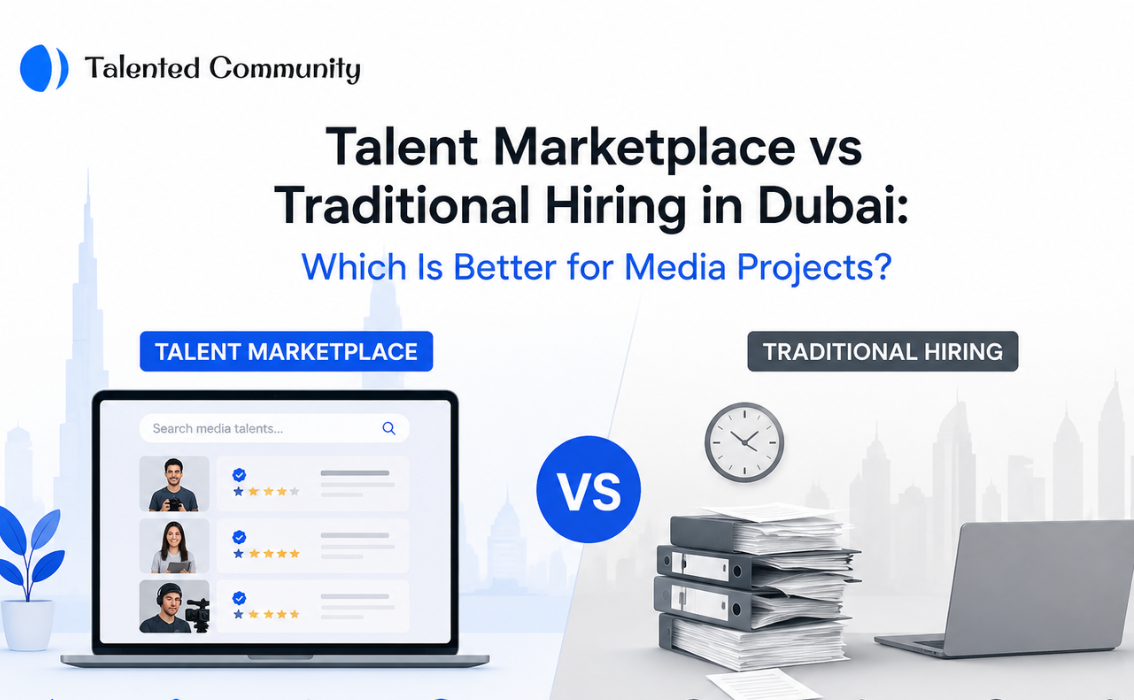
Understanding Traditional Hiring
Traditional hiring is the conventional recruitment process where companies advertise vacancies, review resumes, conduct interviews, negotiate salaries, and onboard employees.
This model works well for organizations looking to build long-term internal teams. Hiring permanent employees provides stability, deeper organizational knowledge, and ongoing collaboration.
However, media projects often require specialized expertise that may only be needed for a few weeks or months.
For example, you may need:
- Video editors
- Cinematographers
- Motion graphics artists
- Drone operators
- Podcast producers
- Social media content creators
- Creative directors
- Voice-over artists
- Photographers
Hiring each of these professionals as full-time employees is often impractical.
What Is a Talent Marketplace?
A talent marketplace is an online platform that connects businesses with verified freelance professionals across creative industries. Instead of going through lengthy recruitment cycles, companies can directly access skilled media talent based on their project needs.
These platforms allow businesses to browse portfolios, review experience, check client feedback, and hire professionals quickly. This makes the entire hiring process more flexible and efficient.
In Dubai’s fast-paced media environment, where campaigns often require quick execution, talent marketplaces have become an increasingly popular solution.
Speed and Efficiency
One of the biggest differences between the two hiring models is speed.
Traditional hiring takes time because it involves multiple steps such as job postings, screening, interviews, approvals, and onboarding. For media projects with tight deadlines, this can slow down production significantly.
On the other hand, talent marketplaces allow businesses to find and hire professionals almost immediately. Instead of waiting weeks, companies can start working with creative experts in a matter of days or even hours.
This speed advantage makes talent marketplaces especially useful for urgent campaigns, event coverage, and time-sensitive production work.
Cost and Budget Control
Cost is another major factor when comparing both models.
Traditional hiring comes with long-term financial commitments such as salaries, employee benefits, training, and overhead costs like office space and equipment. Even when a project is completed, the cost of full-time employees continues.
Talent marketplaces operate on a project-based model. Businesses only pay for the work they need, without long-term obligations. This makes it easier to control budgets, especially for startups, agencies, and brands running short-term campaigns.
For media projects that vary in scope and duration, this flexibility can significantly reduce unnecessary expenses.
Access to Specialized Media Talent
Media production requires highly specialized skills. A single project may need multiple experts who each bring a different creative ability.
Traditional hiring makes this process more complex because each role must be individually recruited and managed internally. This limits flexibility and slows down production.
Talent marketplaces solve this problem by providing instant access to a wide range of professionals, including video editors, photographers, motion graphics artists, drone operators, content creators, and sound designers.
This allows companies to build complete project teams quickly without long recruitment cycles.
Quality and Portfolio Transparency
In traditional hiring, companies mostly rely on resumes, interviews, and references to evaluate candidates. While useful, this approach does not always reflect the actual quality of creative work.
In contrast, talent marketplaces focus heavily on portfolios and real-world work samples. Businesses can directly evaluate a professional’s past projects, style, and capabilities before hiring them.
Many platforms also include verification systems that ensure freelancers have proven experience, which reduces hiring risks and improves trust.
This makes decision-making more transparent and performance-driven.
Flexibility for Media Projects
Media work is rarely static. Campaigns change, deadlines shift, and client requirements evolve quickly.
Traditional hiring is less flexible because employees are tied to fixed roles and responsibilities. Adjusting team size or skill sets can be difficult and time-consuming.
Talent marketplaces offer much greater flexibility. Businesses can scale teams up or down depending on project requirements. They can hire specialists for short-term assignments without long-term commitments.
This flexibility is especially valuable in Dubai’s fast-moving media industry, where responsiveness is essential.
Administrative Load and Management
Traditional hiring involves significant administrative effort. Companies must handle contracts, payroll, employee benefits, compliance, and ongoing HR management. This adds complexity, especially for smaller teams or project-based work.
Talent marketplaces reduce this burden by streamlining the hiring process. Most administrative tasks are handled by the platform, allowing businesses to focus more on creative output rather than operational management.
This simplicity is a major advantage for agencies managing multiple media projects at once.
When Traditional Hiring Makes Sense
Despite the rise of digital hiring platforms, traditional hiring still plays an important role. It is best suited for companies that want to build permanent creative departments or maintain long-term in-house teams.
It is also useful when businesses need full-time employees who are deeply integrated into company operations, brand identity, and long-term strategy.
When Talent Marketplaces Are the Better Choice
Talent marketplaces are ideal for businesses that work on:
- Short-term media projects
- Campaign-based production work
- Event coverage and live shoots
- Social media content creation
- Advertising and branding projects
- Fast-turnaround creative assignments
They are especially useful when speed, flexibility, and access to specialized talent are top priorities.
The Future of Media Hiring in Dubai
Dubai’s creative industry is evolving toward a hybrid hiring model. Many companies now combine internal teams with freelance professionals sourced from talent marketplaces.
This hybrid approach offers the best of both worlds: stability from in-house staff and flexibility from on-demand talent.
As demand for content continues to grow across digital platforms, businesses that adopt flexible hiring strategies will have a competitive advantage in producing high-quality media at scale.
Final Thoughts
The comparison between talent marketplaces and traditional hiring is not about which one is universally better, but about which one fits your specific needs.
Traditional hiring remains valuable for long-term stability and internal team building. However, for most media projects in Dubai, where speed, specialization, and flexibility matter most, talent marketplaces provide a more efficient and modern solution.
By choosing the right hiring model for the right situation, businesses can optimize costs, improve productivity, and ensure better creative outcomes for every project.