
Influencer Marketing Costs in India in 2026
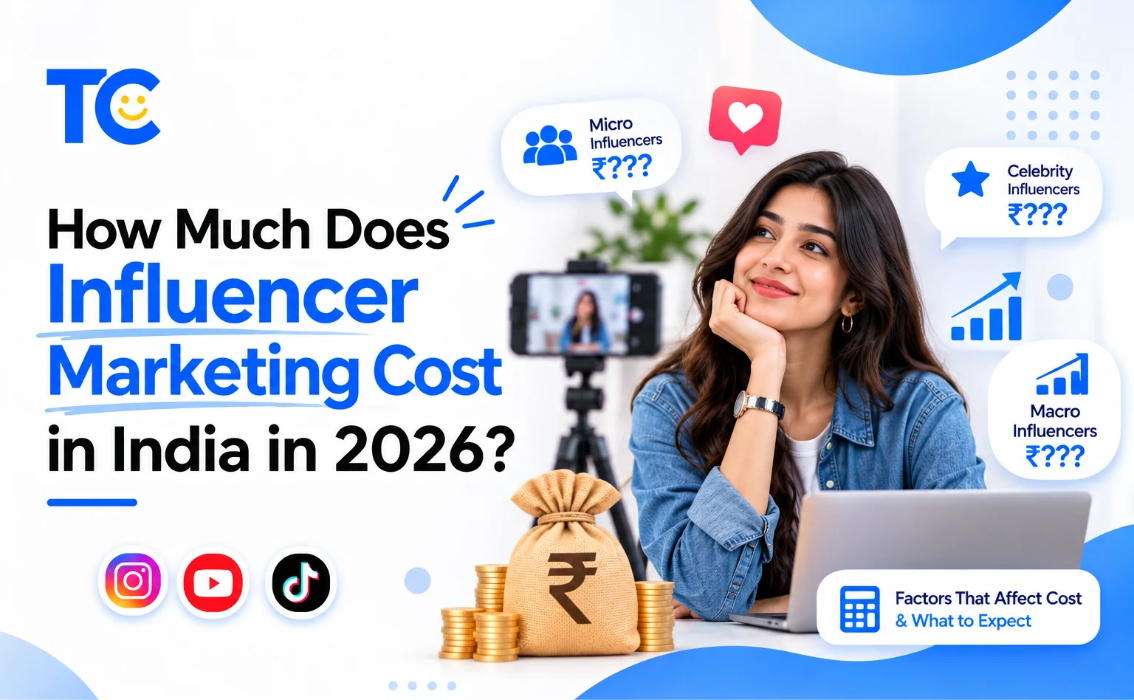
Influencers are generally divided into categories according to their follower counts. Although there is no universally accepted pricing system, these categories provide a starting point for comparing rates.
Nano influencers, who typically have between 1,000 and 10,000 followers, may charge approximately ₹2,000 to ₹10,000 for a sponsored Instagram Reel. Micro influencers with 10,000 to 100,000 followers often charge between ₹8,000 and ₹75,000.
For mid-tier influencers with 100,000 to 500,000 followers, prices can range from ₹50,000 to ₹2.25 lakh per Reel. Macro influencers with audiences between 500,000 and one million followers may charge ₹2 lakh to ₹8 lakh.
Mega influencers with over one million followers often command fees starting around ₹5 lakh, with some collaborations exceeding ₹25 lakh, particularly when celebrities or major entertainment personalities are involved.
These figures are broad estimates based on published Indian pricing guides for 2026, rather than fixed industry rates. Actual fees vary considerably between creators and platforms.
A creator's follower count is useful, but it rarely tells the entire story. Two influencers with similar audiences may charge different amounts because their engagement, production quality and relationships with followers differ.
For brands, the question is not simply which influencer costs less, but which one is most likely to reach the right people.
Why Are Brands Spending More on Influencer Marketing?
Influencer marketing has moved beyond occasional celebrity endorsements. Smaller businesses, regional brands and established companies now work with content creators to introduce products, explain services and connect with potential customers.
The scale of the industry reflects that shift.
A 2025 report from WPP Media's Goat Agency and Kantar, cited by the India Brand Equity Foundation, projected that India's influencer marketing industry would grow by 25% in 2025 from an estimated ₹3,600 crore in 2024.
The research also found that approximately 70% of brands regarded trust and credibility as primary reasons for working with influencers.
This helps explain why businesses are willing to invest in creators who have developed close relationships with particular audiences.
A skincare recommendation from someone whose audience regularly follows their beauty routine, for instance, may feel more relevant than a conventional advertisement shown to a much broader group.
That does not guarantee sales. It does, however, show why audience relevance has become an important part of influencer selection.
How Much Do Different Types of Influencers Charge in India?
Nano Influencers: Small Audiences, Affordable Collaborations
Nano influencers generally have between 1,000 and 10,000 followers.
They tend to create content around specific interests, local communities or personal experiences. For smaller businesses, these creators can offer a relatively affordable way to introduce a product to a focused audience.
A neighbourhood café in Bengaluru, for example, might collaborate with a local food creator to introduce a new menu. Rather than spending heavily on a celebrity endorsement, the café could work with several smaller creators whose followers live nearby.
Nano influencer collaborations commonly begin around ₹2,000 per Reel, although some creators accept products or services instead of payment.
Micro Influencers: A Popular Choice for Growing Brands
Micro influencers usually have between 10,000 and 100,000 followers.
Their audiences are large enough to provide meaningful exposure while often remaining focused on particular interests such as fashion, technology, food, fitness or travel.
In India, micro influencers may charge approximately ₹8,000 to ₹75,000 for a sponsored Reel, depending on their reach and the scope of the campaign.
A fashion brand introducing a new collection could choose several micro influencers with different audiences instead of spending its entire budget on one large creator.
This approach allows the company to test different content styles, audience segments and promotional messages.
Mid-Tier and Macro Influencers: Reaching Larger Audiences
For brands seeking visibility beyond a single local market, mid-tier and macro influencers offer broader exposure.
These creators often have established content formats, professional production processes and considerable experience with commercial partnerships.
Mid-tier creators may charge ₹50,000 to ₹2.25 lakh for a Reel, while macro influencer fees can extend into several lakh rupees.
The higher price is not necessarily linked to follower count alone. Consistent video views, recognised expertise, audience demographics and previous campaign performance can all influence negotiations.
Mega Influencers and Celebrities: Premium Brand Visibility
Collaborations with major entertainment personalities, athletes and established digital celebrities generally require much larger budgets.
A single sponsored appearance or social media post may cost several lakh rupees, with high-profile celebrity campaigns reaching considerably higher amounts.
These partnerships are often designed to create broad awareness rather than deliver immediate purchases.
For smaller companies, the expense may be difficult to justify. Large consumer brands, however, may consider celebrity partnerships as part of wider advertising campaigns.
Does the Social Media Platform Affect Influencer Marketing Costs?
The platform matters because audiences consume content differently on Instagram, YouTube and other channels.
Instagram remains a common choice for fashion, lifestyle, beauty, travel and consumer product campaigns. Brands can collaborate through Reels, Stories, feed posts and combinations of formats.
YouTube collaborations often involve more detailed production. A creator reviewing a smartphone, for example, may need time to test the device, record demonstrations and edit a longer video.
This additional work can make YouTube integrations and dedicated videos more expensive than short-form Instagram content.
A 2026 Indian pricing benchmark from BrandGrowAgency estimates that YouTube integrations can cost roughly 1.5 to 2.5 times as much as a comparable Instagram Reel, although individual quotes vary.
The right platform ultimately depends on the product and the customer's purchasing journey.
A restaurant may benefit from a short Instagram Reel showing its dishes. A technology company introducing a complex product may find a detailed YouTube explanation more useful.
What Factors Influence the Cost of Influencer Marketing in India?
Audience Engagement
A large follower count does not automatically mean a creator has an active audience.
Brands increasingly examine average video views, comments, shares and audience interactions before agreeing to a collaboration.
An influencer with 40,000 followers and consistent engagement may offer better value for a particular campaign than someone with several hundred thousand followers but limited audience interaction.
Content Production Requirements
A simple product demonstration recorded at home will generally require less work than a professionally produced video involving multiple locations, equipment and editing.
If a campaign requires elaborate production, travel or specialised creative work, these expenses may increase the final fee.
Brands should establish what is included in the quotation before signing an agreement.
Industry and Audience Specialisation
Some content categories command higher rates because the subject requires specialist knowledge or attracts an audience with particular purchasing interests.
Finance, technology and specialised professional content can carry a premium over more general lifestyle categories.
However, the value depends on how closely the creator's audience matches the brand's customers.
Content Usage Rights
Paying an influencer to publish a Reel does not always give a brand permission to use that video in paid advertisements.
If the company wants to repurpose the content across social media ads, its website or other marketing channels, additional licensing fees may apply.
The agreement should specify where the content can appear and how long the brand can use it.
Exclusivity and Long-Term Partnerships
An influencer may charge more if a brand asks them not to promote competing products for a particular period.
Long-term collaborations can also affect pricing.
Although the total commitment may be larger, a multi-month partnership may offer more predictable rates and greater continuity than arranging separate one-off promotions.
How Much Budget Does a Business Need for an Influencer Marketing Campaign?
A company does not necessarily need several lakh rupees to begin experimenting with influencer marketing.
Consider a small beauty business planning its first Instagram campaign with a budget of ₹50,000.
The business could collaborate with five nano influencers, paying each creator ₹5,000 for a sponsored Reel. That would account for ₹25,000 of the total budget.
Another ₹5,000 could cover product delivery and logistics, while ₹10,000 could be allocated to campaign coordination and management. The remaining ₹10,000 could be reserved for performance tracking and unexpected expenses.
This is an illustrative budget rather than a fixed campaign package. Applicable taxes and additional content usage rights would need to be considered separately.
The business could give each creator a unique discount code or tracking link to understand which collaborations generate website visits and purchases.
If the campaign performs well, it could gradually expand the budget.
A larger company might instead spend ₹2 lakh to ₹5 lakh or more on a campaign involving micro and mid-tier influencers, professional management and additional content promotion.
The important point is that the budget should match the campaign's objective rather than the popularity of an individual creator.
What Additional Costs Should Brands Consider?
Influencer fees are often the largest expense, but they are not always the only one.
Campaign management agencies may charge a fixed project fee, a percentage of creator spending or a monthly retainer.
Product samples, shipping, travel, video production, content licensing and paid advertising can create additional expenses.
Brands should also clarify whether quoted amounts include applicable taxes.
These details matter because a campaign that initially appears affordable can become considerably more expensive once all requirements are included.
A written agreement covering deliverables, deadlines, payments, content approvals, disclosures and usage rights can help avoid misunderstandings.
How Can Brands Measure Influencer Marketing ROI?
A successful influencer campaign should achieve more than simply generating views.
The right performance measures depend on what the business wants to accomplish.
For a new brand, reach and awareness may be the immediate priorities. For an established online store, website visits, qualified leads and purchases may matter more.
Brands can evaluate campaign performance by looking at engagement rates, cost per engagement, customer acquisition costs and conversions. They should also consider whether the content reached the intended audience.
Consider two creators.
One charges ₹10,000 and generates five sales. Another charges ₹20,000 and generates 40 sales.
Based on the influencer fee alone, the first produces a cost per acquisition of ₹2,000, while the second produces a cost of ₹500.
In this example, the more expensive creator delivers better acquisition efficiency.
Actual results will depend on factors such as product pricing, audience quality, tracking accuracy and the purchasing process.
How to Choose the Right Influencer for Your Budget
Before contacting influencers, brands should identify who they want to reach.
A fitness company targeting young professionals in Delhi may require a different creator from a jewellery business targeting wedding shoppers across India.
Geography, language, age, interests and spending behaviour can be more important than follower numbers.
Brands should also review a creator's recent posts, average views and previous collaborations. These details offer a clearer picture of how the audience responds to sponsored content.
It can be useful to begin with a limited campaign, compare results and then establish longer-term relationships with the creators who perform well.
Paid partnerships should also be clearly identified. The Advertising Standards Council of India's influencer guidelines require appropriate disclosures when creators have a material connection with advertisers, including product gifting and barter arrangements.
Transparency helps audiences understand when content is promotional.
Is Influencer Marketing Worth the Investment in 2026?
Influencer marketing can be a useful part of a brand's advertising strategy, but its value cannot be determined by follower count or campaign cost alone.
For some businesses, a handful of local creators may provide the exposure they need. Others may benefit from larger partnerships that introduce their products to audiences across the country.
India's growing creator economy gives businesses more options than ever before. It also makes careful selection increasingly important.
The brands that benefit most will not necessarily be those spending the largest amounts.
They will be the ones that understand their customers, choose creators whose audiences genuinely match those customers, and measure what happens after the content is published.
Ultimately, the cost of influencer marketing matters. But what that investment achieves matters considerably more.
Frequently Asked Questions
How much does an Instagram influencer charge in India in 2026?
An Instagram influencer may charge approximately ₹2,000 for a small sponsored Reel to several lakh rupees for a collaboration with a major creator. Rates depend on audience size, engagement, niche and deliverables.
Can small businesses afford influencer marketing?
Yes. Small businesses can begin with nano influencers, local content creators or product-based collaborations. A limited pilot campaign can help establish whether influencer marketing is suitable before committing to a larger budget.
Are micro influencers better than celebrities?
Neither category is automatically better. Micro influencers can be useful for niche audiences and targeted campaigns, while celebrities can provide broader visibility. The right choice depends on the brand's objective.
How much does a YouTube influencer charge in India?
YouTube costs vary considerably. Smaller creators may charge several thousand rupees for integrations, while established channels may charge lakhs for dedicated sponsored videos. Production demands, expected views and audience quality influence the final price.
What is the minimum budget for influencer marketing in India?
Individual collaborations can begin at a few thousand rupees or through product exchanges. A practical paid pilot might use ₹25,000 to ₹50,000, depending on the number of creators, products and management requirements. There is no official minimum budget.