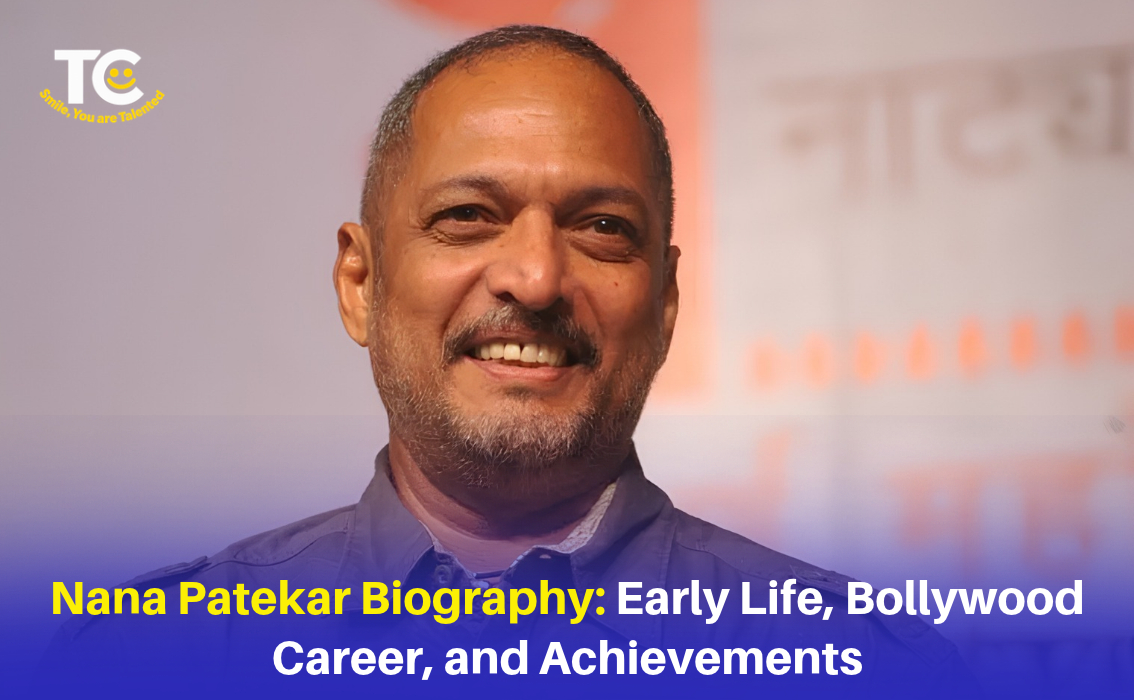
Nana Patekar Biography: Quick Facts
Nana Patekar's life and career can be summarised through the following details.
-
Full name: Vishwanath Patekar
-
Popular name: Nana Patekar
-
Date of birth: January 1, 1951
-
Birthplace: Murud-Janjira, Maharashtra, India
-
Profession: Actor, filmmaker, screenwriter, and theatre artist
-
Education: Sir J. J. Institute of Applied Art, Mumbai
-
Film debut: Gaman (1978)
-
Notable films: Parinda, Krantiveer, Agni Sakshi, Ab Tak Chhappan, Welcome, and Natsamrat
-
Major honours: Three National Film Awards and the Padma Shri
-
Spouse: Neelakanti Patekar
-
Children: His family includes his son, Malhar Patekar
-
Date of death: October 8, 2026
Nana Patekar's Early Life and Family Background
Nana Patekar was born into a Marathi family in Murud-Janjira, a coastal town in Maharashtra. His birth name was Vishwanath Patekar, but he eventually became widely recognised by his nickname, Nana.
His early life was shaped by a significant financial setback. His father worked in the textile business, but the family's financial circumstances deteriorated when Patekar was still young. The experience exposed him to hardship at an age when many children are primarily focused on their education and personal interests.
At approximately 13, he began working to help support his family. One of the jobs he undertook involved painting film posters in Mumbai. He later recalled earning very little for this work and walking considerable distances after school.
These experiences became an important part of his life story. They exposed him to the struggles of ordinary working people, a perspective that would later become relevant to the realistic characters he portrayed on screen.
Rather than following a conventional path towards stardom, Patekar gradually developed his career through education, artistic work, theatre, and small film roles.
Education and Interest in Art
Patekar studied applied art at the Sir J. J. Institute of Applied Art in Mumbai. His education helped him develop an understanding of visual expression and artistic presentation.
Before becoming widely known as an actor, he also worked as a commercial artist. This background gave him experience outside the film industry and contributed to his broader creative interests.
However, theatre gradually became his primary artistic pursuit. Performing on stage allowed him to develop his voice, physical expressions, timing, and ability to communicate emotions directly to an audience.
His early involvement in Marathi theatre helped establish the foundation for his later film career.
How Nana Patekar Started His Acting Career
Nana Patekar's journey into acting developed gradually rather than through an immediate breakthrough.
He became involved in Marathi theatre and worked with theatre groups and artists who helped him gain practical experience. Stage performances taught him how to understand a character, interpret dialogue, and communicate complex emotions without relying on cinematic techniques.
His early theatre experience was particularly important because it encouraged a performance style built around observation and realism.
Patekar eventually moved into films, making his Hindi film debut with Gaman in 1978. The film, directed by Muzaffar Ali, featured a story centred on migration and the experiences of people seeking opportunities in a large city.
Although he did not immediately become a mainstream star, the film marked the beginning of a career that would eventually span several generations of Indian cinema.
In the years that followed, he appeared in different Hindi and Marathi productions, steadily developing his reputation as a serious performer.
Nana Patekar's Bollywood Career and Major Breakthroughs
Nana Patekar's career demonstrates how an actor can establish a distinctive identity without relying exclusively on conventional leading-man roles.
His breakthrough came during the 1980s, when his performances in socially relevant and dramatic films attracted greater attention.
Ankush and the Rise to Recognition
The 1986 film Ankush, directed by N. Chandra, was an important turning point in Patekar's career.
The film explored social frustration and the circumstances surrounding young people facing difficult choices. Its realistic approach and themes of injustice resonated with audiences.
Patekar's performance helped establish him as an actor capable of portraying anger, vulnerability, and rebellion convincingly.
The success of Ankush also opened the door to more substantial roles and strengthened his position within Hindi cinema.
Salaam Bombay! and Parinda
Two films that contributed significantly to Patekar's reputation were Salaam Bombay! (1988) and Parinda (1989).
Directed by Mira Nair, Salaam Bombay! presented a realistic portrayal of children living on the streets of Mumbai. The film received international recognition and was nominated for the Academy Award for Best Foreign Language Film.
Patekar's work in the film formed part of his growing association with cinema that examined difficult social realities.
In Parinda, directed by Vidhu Vinod Chopra, he delivered another memorable performance. The film explored the violent world of organised crime in Mumbai and became an important work in Hindi crime cinema.
His portrayal earned him the National Film Award for Best Supporting Actor and a Filmfare Award for Best Supporting Actor.
These achievements established Patekar as a performer who could bring considerable depth to supporting roles.
Krantiveer and National Recognition
The 1994 film Krantiveer became one of the defining projects of Patekar's career.
Directed by Mehul Kumar, the film featured him as Pratap Narayan Tilak, a man whose anger at corruption and social injustice drives the story.
Patekar's performance was forceful and emotionally charged. His dialogue delivery became one of the film's most memorable features, and the character helped cement his reputation as an actor capable of commanding the screen.
His performance earned him the National Film Award for Best Actor, along with the Filmfare Award for Best Actor.
The film remains one of the most recognisable examples of his work in socially charged mainstream cinema.
Agni Sakshi and Khamoshi: The Musical
Patekar continued to demonstrate his range during the 1990s.
In Agni Sakshi (1996), he delivered a performance that earned him the National Film Award for Best Supporting Actor.
The same year, he appeared in Sanjay Leela Bhansali's Khamoshi: The Musical, a drama that explored family relationships, communication, and emotional conflict.
His role in Khamoshi was different from the aggressive characters audiences often associated with him. The performance highlighted his ability to portray emotional vulnerability and complicated family relationships.
These films reinforced the fact that his acting style was not limited to anger, intensity, or confrontational dialogue.
Nana Patekar's Most Memorable Movies
Throughout his career, Patekar appeared in films spanning crime, action, drama, comedy, and political storytelling.
Some of his most notable works include the following.
Parinda (1989): A crime drama that showcased his ability to portray a complex and intimidating character. The performance earned him major acting honours.
Krantiveer (1994): One of his best-known leading roles, recognised for its emotional intensity and socially charged dialogue.
Agni Sakshi (1996): A psychological drama that demonstrated his ability to portray unsettling and complicated characters.
Ab Tak Chhappan (2004): A crime film in which he played Inspector Sadhu Agashe, a police officer navigating the difficult realities of Mumbai's underworld.
Apaharan (2005): A political crime drama that earned him further recognition for his performance in a negative role.
Taxi No. 9211 (2006): A film featuring Patekar alongside John Abraham, allowing him to explore a character-driven story with elements of humour and drama.
Welcome (2007): A comedy that introduced him to a different segment of the audience through his portrayal of Uday Shetty, a gangster with an exaggerated sense of authority.
Raajneeti (2010): A political drama in which he played Brij Gopal, a character involved in a story of power, ambition, and political rivalry.
Natsamrat (2016): A Marathi film in which he portrayed Ganpat Ramchandra Belwalkar, a retired theatre actor facing the emotional challenges of ageing, family relationships, and the loss of his former identity.
Together, these films demonstrate the breadth of Patekar's work and his ability to move between different genres.
Nana Patekar in Welcome: A Different Side of His Acting
Although Patekar was widely admired for serious and intense performances, his role in Welcome introduced audiences to his remarkable comic timing.
He played Uday Shetty, a gangster who attempts to maintain an image of authority while becoming involved in increasingly absurd situations.
The character's exaggerated seriousness, distinctive expressions, and interactions with other characters made him an important part of the film's humour.
Patekar's performance demonstrated that effective comedy does not always require a complete change in acting technique. His naturally intense delivery became a source of humour when placed in the right context.
He reprised the role in Welcome Back (2015), further strengthening the character's popularity.
For audiences familiar primarily with his dramatic performances, these films offered a different perspective on his abilities.
Nana Patekar as a Director and Writer
Patekar also explored filmmaking beyond acting.
His directorial debut was Prahaar: The Final Attack, released in 1991. The film starred Patekar alongside Dimple Kapadia and explored military training, discipline, and the challenges associated with returning to civilian life.
The project reflected his interest in the armed forces and allowed him to approach storytelling from behind the camera.
Directing requires a different set of skills from acting, including shaping performances, managing production, and maintaining a consistent vision throughout a film.
By taking on this responsibility, Patekar expanded his contribution to Indian cinema beyond his work in front of the camera.
His broader creative career also included writing and singing, reflecting his interest in different aspects of filmmaking and performance.
Nana Patekar's Awards and Achievements
Nana Patekar received several major honours throughout his career, recognising his contribution to Indian cinema.
National Film Awards
The National Film Awards are among India's most prominent film honours. Patekar won three National Film Awards across two acting categories.
His recognised performances included:
-
Best Supporting Actor: Parinda (1989).
-
Best Actor: Krantiveer (1994).
-
Best Supporting Actor: Agni Sakshi (1996).
These awards reflected his ability to deliver compelling performances in both leading and supporting roles.
Filmfare Awards
Patekar also received recognition at the Filmfare Awards.
His honours included awards for his performances in Parinda, Angaar, Krantiveer, and Apaharan.
His work in these films demonstrated his versatility across supporting roles, leading performances, and negative characters.
Padma Shri
In 2013, the Government of India awarded Patekar the Padma Shri, one of the country's highest civilian honours.
The award recognised his contribution to the arts and his longstanding presence in Indian cinema.
His achievements extended beyond a single successful film or performance. Across decades, he established himself as an actor whose work was recognised by both audiences and major award institutions.
Nana Patekar's Personal Life
Despite his public career, Patekar generally maintained a relatively private personal life.
He married Neelakanti Patekar in 1978. Their family life included periods of personal hardship, and he experienced the loss of a son during infancy. He also had a son, Malhar Patekar.
Patekar's personal experiences, including financial struggles during childhood and family losses, formed part of the background against which his career developed.
However, it is important not to assume that a particular screen performance directly reflects an actor's private experiences. His professional work was shaped by his artistic training, script choices, collaborations, and interpretation of characters.
Over the years, he became known for keeping a relatively low-profile lifestyle compared with some mainstream film stars.
His public image was often associated with directness, simplicity, and a strong commitment to his work.
Nana Patekar's Social Work and Naam Foundation
Beyond cinema, Patekar became associated with charitable activities and support for people facing financial hardship.
He co-founded the Naam Foundation with Marathi actor Makarand Anaspure. The organisation became associated with efforts to assist drought-affected communities and farmers in Maharashtra.
The foundation's work focused on supporting vulnerable rural communities affected by water shortages and agricultural difficulties.
Its activities reflected a broader concern with the economic pressures experienced by farmers and families in rural areas.
Patekar's association with the foundation added another dimension to his public life. While his films brought him national recognition, his involvement in social initiatives connected his name with efforts to address problems outside the entertainment industry.
When evaluating charitable work, it is useful to distinguish between an organisation's stated objectives, its specific programmes, and independently documented outcomes. These details provide a clearer understanding of the practical impact of such initiatives.
Nana Patekar's Acting Style: What Made Him Different?
Nana Patekar developed a screen presence that was difficult to confuse with that of other actors.
His style combined controlled physical movement, sharp dialogue delivery, expressive facial movements, and an ability to communicate tension through silence.
Several characteristics helped define his performances.
Powerful Dialogue Delivery
Patekar was particularly recognised for his voice and delivery. Rather than treating dialogue as a simple exchange of words, he often used pauses, changes in volume, and shifts in tone to communicate a character's emotional state.
This approach made many of his dramatic scenes memorable.
Realistic Character Portrayals
His theatre background helped him develop an understanding of character motivation and physical expression.
Whether portraying a police officer, a troubled family member, a criminal, or a political figure, he often gave his characters distinctive habits and emotional contradictions.
Versatility Across Genres
Patekar's career included intense dramas, crime films, political stories, and mainstream comedies.
His portrayal of Uday Shetty in Welcome demonstrated how his established performance style could be adapted to humour without losing its recognisable qualities.
Commitment to Difficult Roles
Many of his memorable characters were morally complicated rather than straightforward heroes.
They could be aggressive, vulnerable, conflicted, or unpredictable. This complexity gave him opportunities to explore different aspects of human behaviour.
His acting style became one of the defining features of his contribution to Hindi and Marathi cinema.
Nana Patekar's Final Years and Legacy
During the later years of his career, Patekar continued to appear in projects across Hindi and Marathi cinema.
His performance in Natsamrat received considerable attention for its emotional depth. The film allowed him to revisit themes closely associated with theatre, including artistic identity, ageing, family relationships, and the challenges of adjusting to life after professional success.
He also appeared in projects such as The Vaccine War (2023), demonstrating his continued interest in roles connected to contemporary subjects.
Patekar died on October 8, 2026, at the age of 75. His death marked the end of a career that had extended across nearly five decades.
His legacy rests on more than his most famous dialogue or commercially successful films. It includes his performances in socially conscious cinema, his work in Marathi theatre and film, his experience as a director, and his ability to portray characters across a wide emotional range.
For aspiring actors, his career also illustrates that there is no single route to professional recognition. His journey developed through theatre, years of work, supporting roles, and a willingness to take on characters that differed from conventional leading-man roles.
Nana Patekar remains an important figure in discussions of Indian acting because his filmography demonstrates how distinctive performance choices can leave a lasting impression on audiences.
Frequently Asked Questions About Nana Patekar
Who was Nana Patekar?
Nana Patekar was an Indian actor, filmmaker, writer, and theatre artist known for his work in Hindi and Marathi cinema. His notable films included Parinda, Krantiveer, Agni Sakshi, Ab Tak Chhappan, Welcome, and Natsamrat.
What was Nana Patekar's real name?
His real name was Vishwanath Patekar. He became widely known as Nana Patekar throughout his acting career.
When was Nana Patekar born?
Nana Patekar was born on January 1, 1951, in Murud-Janjira, Maharashtra, India.
When did Nana Patekar die?
Nana Patekar died on October 8, 2026, at the age of 75.
What was Nana Patekar's first film?
His Hindi film debut was Gaman, released in 1978. The film was directed by Muzaffar Ali.
Which film made Nana Patekar famous?
Ankush (1986) was an important breakthrough in his career. His later performances in Parinda and Krantiveer further established his reputation.
How many National Film Awards did Nana Patekar win?
Nana Patekar won three National Film Awards: Best Supporting Actor for Parinda, Best Actor for Krantiveer, and Best Supporting Actor for Agni Sakshi.
Did Nana Patekar receive the Padma Shri?
Yes. He received the Padma Shri in 2013 in recognition of his contribution to the arts.
Which role did Nana Patekar play in Welcome?
He played Uday Shetty, a gangster whose exaggerated seriousness and comic interactions became important elements of Welcome and its sequel, Welcome Back.
Was Nana Patekar involved in social work?
Yes. He co-founded the Naam Foundation with actor Makarand Anaspure. The organisation became associated with initiatives supporting drought-affected communities and farmers in Maharashtra.
Conclusion
Nana Patekar's biography is the story of an artist who built a distinctive career through perseverance, theatre experience, and memorable performances. From his difficult childhood and early work as a commercial artist to his recognition as a National Film Award-winning actor, his journey covered several important chapters of Indian cinema.
His performances in Parinda, Krantiveer, Agni Sakshi, Ab Tak Chhappan, Welcome, and Natsamrat showcased his ability to move between dramatic intensity and comedy. His work as a director and his involvement in social initiatives further broadened his public legacy.
Although his life ended in October 2026, his films continue to offer audiences examples of powerful character acting. His career remains a significant part of the story of modern Hindi and Marathi cinema.